Russia's Biggest Question: Floating Airfields

Russia, perhaps will get a few carriers. In any case, the representatives of the United Shipbuilding Corporation have repeatedly asserted that the design of a new heavy aircraft-carrying cruiser must begin.

Showing posts with label Soviet. Show all posts

Friday, September 14, 2012

Katyn: a guilt of many, not just Stalin

The publication on Internet sites of the American National Archives of the documents on Katyn killings, with archive materials from the State Department, CIA and FBI carefully collected and put together, led to a long forgotten debate in Poland.

If the American and the British leaders knew the truth about the summary execution of the Polish officers by Stalin’s secret police in 1940, why didn’t they reveal the truth as soon as they could? Why did they have to wait until the cold war reaches its zenith in the early 1950s to make their accusations formal? It was only in 1953 that congressman Ray Madden’s Commission, charged with investigating the matter, came out with an official statement putting the blame on the Soviet side on the basis of the materials available in the US.

Tuesday, September 4, 2012

What the Western media doesn't say about green on blue attacks in Afghanistan

by Louis DeAnda

The essence of betrayal

For the enemy in Afghanistan, nothing succeeds like success. The last year Afghanistan has seen an increase in the frequency of attacks upon U.S. and International Security Assistance Force (ISAF) personnel by Afghans who were soldiers, recruits undergoing training, acting as embedded advisors, or otherwise occupying low-level security positions at bases or outposts jointly occupied.

Friday, March 16, 2012

US Never Learns From Past

Interview with Dmitry Babich, a political commentator with the Voice of Russia.

Saturday, February 11, 2012

Soviet T-34 medium tank vs American M4A2 Sherman


Saturday, January 28, 2012

Chinese “Badger” with the Soviet Genealogical

Air China adopted a new heavy bomber H-6K. This news may seem sensational and Russians enthusiastically followed the development of modern military aviation. After all, they know very well the origin of the aircraft.

H-6K is the latest in the series today, a modification of H-6 bomber - a licensed copy of our famous former Tu-16, created by Tupolev Design Bureau in the late 40s - early 50s.

Destroy The Ammunition But Intelligently!!

In the warehouses of industrial enterprises, and military bases, arsenals of the Russian Ministry of Defense (more than 150 objects) accumulated tens of millions of tons of ammunition. Many of them are written off, end of life cycle. Keeping these colossal reserves imposes a significant additional burden on the state budget.

Federal special-purpose program "Industrial utilization of weapons and military hardware in 2011-2015 and in 2020" will be approved by the Russian government until the end of November, and until 2012 the Defense Ministry had planned elimination of around 1.7 million tons of old rockets, bombs, shells and mines.”

Tuesday, January 24, 2012

Ukraine’s Unknown Missile Adventures

The mystery of the missing nuclear warheads from Ukraine still has not been disclosed, but the fact of loss is recognized

Everyone knows that in 90 years, Ukraine has voluntarily given up all nuclear weapons and strategic missiles and strategic weapons of military aircraft. Kiev widely advertised these steps as the proof of the commitment of the young state of peace and disarmament. Less well known is that this failure was not entirely voluntary, and there was a fairly strong pressure of both the West and Russia. And it is very little known, about the nuclear arsenal Ukraine inherited from USSR.

Saturday, November 26, 2011

King of the Bombs


The explosion as seen from Durnovtsev's Tu-95.

It was called Tsar Bomba, king of the bombs, but it also went by the name “Big Ivan.” With a yield of 58 megatons, the hydrogen bomb detonated on October 30, 1961, over the Soviet Arctic test site at Novya Zemlya remains the biggest manmade explosion in history (see the video below).

Tuesday, November 8, 2011

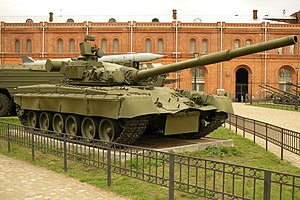
T-80 Better Than M1-Abrams…Really? (Featured post)

Nowadays its easy to generate people’s believe in something. For example, if a daily report on television states that the moon is shaped like a suitcase, as we observed in the night sky is actually nothing more than an optical illusion, then after a while millions of people believe it. And believe it against all odds.

Russians as opposed to West follows a 40-ton class as MBT basis, which leads to many shortcomings...

Country of origin

Name of MBT

Image of MBT

Weight (tonnes)

UK

Challenger 2

click me 62.5
USA M1 Abrams click me 61.3
Germany Leopard 2 click me 62.3
France AMX-56 Lecrec click me 54.5
Israel Merkava Mark IV click me 65
Ukraine/Pakistan T-84/Al-khalid click me 48
Russia T-80U click me 46
Russia T-90 click me 47.5
India Arjun click me 58.5

Friday, November 4, 2011

Protector of Chinese Kingdom: Missile Technology

Over the past few years, Russian statesmen, politicians and pundits have plagued many tons of paper,uttered hundreds of thousands of words  about the deployment of U.S. missile defense system. Meanwhile, developments in BMD were active (and perhaps also under way), not only in the United States but in China, moreover it is not quite unproductive.

45years ago - February 23, 1966 the Government Commission on Defence Science, Technology and Industry of the PRC (Peoples Republic of China) adopted a step by step detailed program of a national missile defense, which was given the code name Project 640. Prone to conspiracy Chinese proceeded in this case of the so-called Directive 640 - governing the wishes expressed in a couple of years earlier by Mao Zedong in his conversation with Qian Syuesenem - the founder of the missile and space programs of China.

Tuesday, October 11, 2011

What Russian Empire?

by Dmitri Trenin

Twenty years ago this month, the Soviet Union — the last of the great 20th century empires — started to crumble following the ill-advised putsch of August 1991. Within two years, it had vanished altogether.

Compared to the prolonged and bloody demises of the British and French empires, the Soviet Union’s collapse was remarkably calm. The “Commonwealth of Independent States” (C.I.S.), which many people mistook for a new name for the Soviet Union — and some dubbed “a fresh edition of the Russian empire” — accomplished the mission of making sure that the dissolution of the U.S.S.R. was one of the most peaceful and least violent imperial exits in history.

Wednesday, October 5, 2011

Red Star in Orbit

Ironically the Soviet’s failure to make the bomb smaller, would ultimately give them the lead in the Space race

This is the story of the Russian Right Stuff. From the first rocket-powered gliders to the epic journey to Mars, this trilogy of films charts the triumphs and tragedies of the Soviet space programme.
Exclusively revealing the realities of the Soviet Space Programme, Windfall Films gained remarkable access to the real history of the cosmonauts. For the first time, they speak out about the hidden truth of these precarious missions something they had never dared do before.

Thursday, September 8, 2011

Russian Aviation School

In the academic buildings of the former Air Force Engineering Academy named after Professor NE Zhukovsky (Moscow), located in the Petrovsky Park, began dismantling the equipment and to send them to Voronezh, where a single military training Air Force Research Center.

Sunday, September 4, 2011

Fall of the Soviet Union—The Inside Story

The fall of the Soviet Union and end of communism in Russia caught the world by surprise twenty years ago. In a  Q&A, Ambassador James F. Collins, the most senior American diplomat in Russia at the time, describes how the United States responded as history unfolded and reflects on the personal diplomacy between the Cold War foes as an August  1991 coup ultimately led to the breakup of the Soviet Union in December.

Friday, September 2, 2011

Rocket and Space Corporation Energia The Legacy of S.P.Korolev

Viewers just want to share this amazing book that I  just had finished reading.

When the world's first artificial satellite sped across the night skies the impact was far-reaching and profound. Not only was this clearly one of the great scientific achievements of the modern age but it was also a catalyst which would propel the United States out of its post-War lethargy. The Political significance of the lift-capability of the R-7 rocket aroused the attentions of the West while irrevocably altering the face of human history. The Space Age had begun. The story of the R-7 rocket and its many offspring is one which still remains a mystery in the West. Now in the post-Cold war era the remarkable accomplishments of the engineers of Rocket & Space Corporation Energia are finally reaching eager readers in the West.

The pages within contain a pictorial record encompassing the entire history of the Russian space programme, from its inception at the end of World War II to the present day.

The sheer wealth of original and durable technology is a testament to the ingenuity of a remarkable people and gives a unique glimpse a the future of the historic partnership between East and West.

Published for the first time completely in English, Rocket & Space Corporation Energia features rare pictures and diagrams including:

Sputnik - Yuri Gagarin's Vostok capsule - the world's first Space Stations - the enormous lunar rocket N1 - Russia's interplanetary probes and the Buran shuttle.

Tuesday, August 30, 2011

Russia in need of ‘Space Realism’

RIA Novosti commentator Alina Chernoivanova
The recent string of spaceflight accidents in Russia is the symptom of a deep crisis in the nation's aerospace industry. Experts say it's time to tone down the rhetoric about Russia being a "great space power." Russia must overcome possible new setbacks and work hard in order to return to the level of quality of 20 years ago.
Russia has lost six spacecraft in a matter of nine months. Last December, a Proton-M booster rocket failed to put three Glonass-M satellites into orbit. The launch of the Rokot booster rocket carrying a military geodesic satellite Geo-IK-2 ended in failure in February. These two accidents cost Anatoly Perminov his job. The long-serving official, who had been at the helm of the Russian Space Agency for seven straight years, left his job before the end of his contract and the completion of the industry overhaul he was supposed to carry out.

Sunday, July 31, 2011

Russia’s Maritime Power Of 2nd Grade

June 17 in St. Petersburg was signed an agreement, as a result of which the Russian Navy a few years later supplemented with four amphibious assault ship of the "Mistral". Two of them will be built in France, the rest - in Russian shipyards. This event led me to some reflections.

The author does not intend to enter into polemics with those who support the signed agreement or rejects it.

Tuesday, July 26, 2011

Assassin Nation: Is There Anyone Left Alive Who Can Actually Run Afghanistan?

By Edward Girardet

In the late summer of 2001, I traveled to northern Afghanistan on assignment for National Geographic to meet with Ahmad Shah Massoud, the leader of the Northern Alliance and the last remaining opposition figure of any significance to the Taliban. I had known Massoud since 1981 and was hoping to interview him in depth about why he had persevered through more than 20 years of fighting, first against the Soviets, then Islamic extremists, and now the Taliban. But no one knew where he was or when he would arrive. The desert winds were too strong for his helicopter to come in, I was told.

Saturday, July 2, 2011

Tales Of An Enigmatic Dragon

I HAVE been riveted to a fascinating account of China’s evolution as a modern power by an author who has had a ringside view of the country’s crucial days in the transformative journey from its near mythical past. Henry Kissinger’s new book, On China, reads like a novel with parallel narratives.

It is at once the story of the country’s Confucian past, its self-absorbed cultural grandeur rooted in the Sino-centric worldview of the Middle Kingdom, and how it all begins to unravel painfully, even tragically, before the assault by ‘distant barbarians’ from the West. That’s how the Chinese still describe their tryst with colonialism. Kissinger’s view of China’s perception of itself is laced with unmasked admiration, bordering on obeisance, of a brilliant but not always idyllic dream, one which was destined to be jolted in its rude appointment with history.

Monday, June 27, 2011

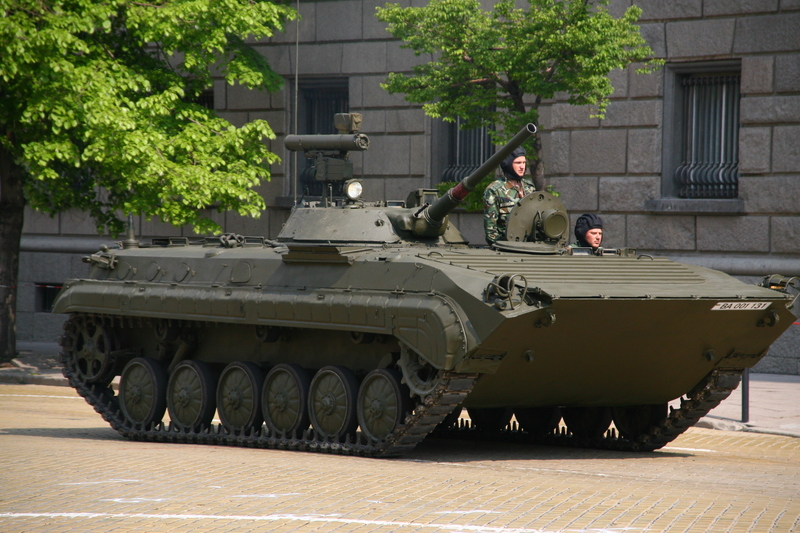
Tank Overhaul: The BMP

Unveiled in the mid-1960s, the Soviet BMP was the world's very first infantry fighting vehicle - a brand new concept for the modern nuclear battlefield. The BMP was designed to protect soldiers from radioactive fallout and allow them to fight from within the vehicle. But the BMP never fought a nuclear war. Instead it fought conventional wars in the Middle East where it was outclassed by its vastly superior American counterpart, the M2 Bradley. Now, Greg Taylor, one of the most experienced tank restorers, will rebuild a Cold War vehicle without enough money, time, and help. Greg is pushed to his limits.