Russia's Biggest Question: Floating Airfields

Russia, perhaps will get a few carriers. In any case, the representatives of the United Shipbuilding Corporation have repeatedly asserted that the design of a new heavy aircraft-carrying cruiser must begin.

Thursday, June 30, 2011

Pendulum Of War

IN the past couple of weeks, Al Qaeda and its franchises have come back with a vengeance, attacking Pakistan, its security forces and the public. This also appears to be a prelude to an increase in violence in Afghanistan in the near future.

An important aspect of these new series of attacks is their concentration on Islamabad, Peshawar and locations along the Durand Line. In their latest onslaughts on urban centres, militants have used both improvised explosive devices and suicide bombers. Clearly, the militants are in good health and pose a serious existential threat to Pakistan.

Monday, June 27, 2011

China Naval & SAMs Developments 2010-2011

Sean O'Connor in his latest issue of I&A analysis discuss the ongoing improvements & progress in the Chinese Naval projection & SAM systems. He discusses the evolution of Chinese SAM from Russian imported  systems & how such systems knowledge is put to manufacture local variants namely HQ-9 & HQ-12 SAMs. The expertise gained by Chinese not only is reflected in missile development but also in the domestic manufacture of RADAR & IADS complexes.

However, author analysis elaborated by Google Earth images reflect that still the potent air defence systems are Russian originated as Chinese are compelled (by the relative inferiority of their domestic complexes) to use them in defending key areas like Beijing & Shanghai…

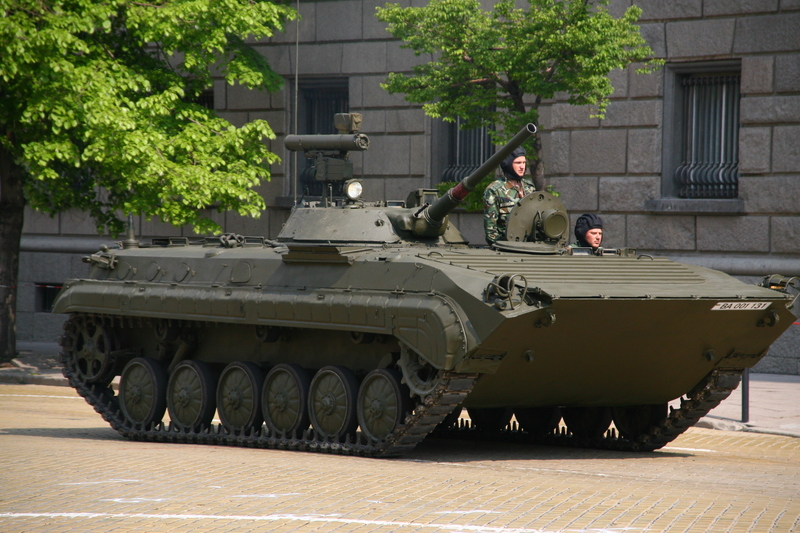
Tank Overhaul: The BMP

Unveiled in the mid-1960s, the Soviet BMP was the world's very first infantry fighting vehicle - a brand new concept for the modern nuclear battlefield. The BMP was designed to protect soldiers from radioactive fallout and allow them to fight from within the vehicle. But the BMP never fought a nuclear war. Instead it fought conventional wars in the Middle East where it was outclassed by its vastly superior American counterpart, the M2 Bradley. Now, Greg Taylor, one of the most experienced tank restorers, will rebuild a Cold War vehicle without enough money, time, and help. Greg is pushed to his limits.

Iran’s Nuclear Future: US Policy Choices

Dissuading Iran from developing nuclear weapons faces major obstacles, but it's too soon to give up trying as it may still be possible to influence the outcome of Iran's internal political debate, according to a RAND Corporation study issued today.

The study, "Iran's Nuclear Future: Critical U.S. Policy Choices," describes the complex considerations underlying future U.S. policy options in responding to Iran's evolving nuclear program. It also assesses the potential effectiveness of each policy option and concludes that difficult policy trade-offs will be required.

Iran’s military views Imam Hossein, who died in the desert of southern Karbala while fighting thousands of the caliph’s soldiers with only 70 of his own men, as a model worthy of emulation. The Islamic Republic’s view of victory—resistance without an actual victory— has shaped its general military doctrine. Fariborz Haghshenass, “Iran’s Doctrine of Asymmetric Naval Warfare,” Washington, D.C.: Washington Institute for Near East Policy, Policy Watch No. 1179, December 21, 2006.

Saturday, June 25, 2011

Arms Sales 2011: Russia, Middle East & Africa

By the important factors in the development of military-political situation in the world, most important recently, are the situations erupted from the beginning of 2011 via the tumultuous events in several Arab countries, primarily located in North Africa. As it erupted excitement strife will affect the volume of arms sales, including exports of articles of Russian military-industrial complex, "MIC" asked to tell one of the leading national expert on the subject, DC's weekly magazine.

Pakistan's Black Pearl-Gwardar

By URMILA VENUGOPALAN

State visits between friendly countries seldom produce surprises or unscripted moments, but the recent trip to China by top Pakistani officials managed to do just that.

Upon returning to Islamabad, the defense minister, Ahmed Mukhtar, made two eyebrow-raising announcements: first, that Beijing had agreed to take over operation of Gwadar port in Baluchistan, and, second, that he had invited the Chinese to build a naval base there. China's leaders, seemingly caught unaware by these statements, promptly denied them.